
When it comes to installing tile, a professional-looking finished surface depends on more than choosing the right tile. Proper substrate preparation, consistent mortar coverage, accurate spacing, and keeping adjacent tiles flush all play an important role. One of the most useful tools for achieving that result is a tile leveling system.
Tile leveling clips are especially valuable when installing large-format porcelain, ceramic, and rectified tile, where even small differences in height between neighboring tiles can become noticeable. A leveling system helps hold adjacent tiles in the same plane while the thinset or tile adhesive cures, reducing tile lippage and creating cleaner, more consistent grout lines.
But how do tile leveling clips actually work, and are they worth using during tile installation?
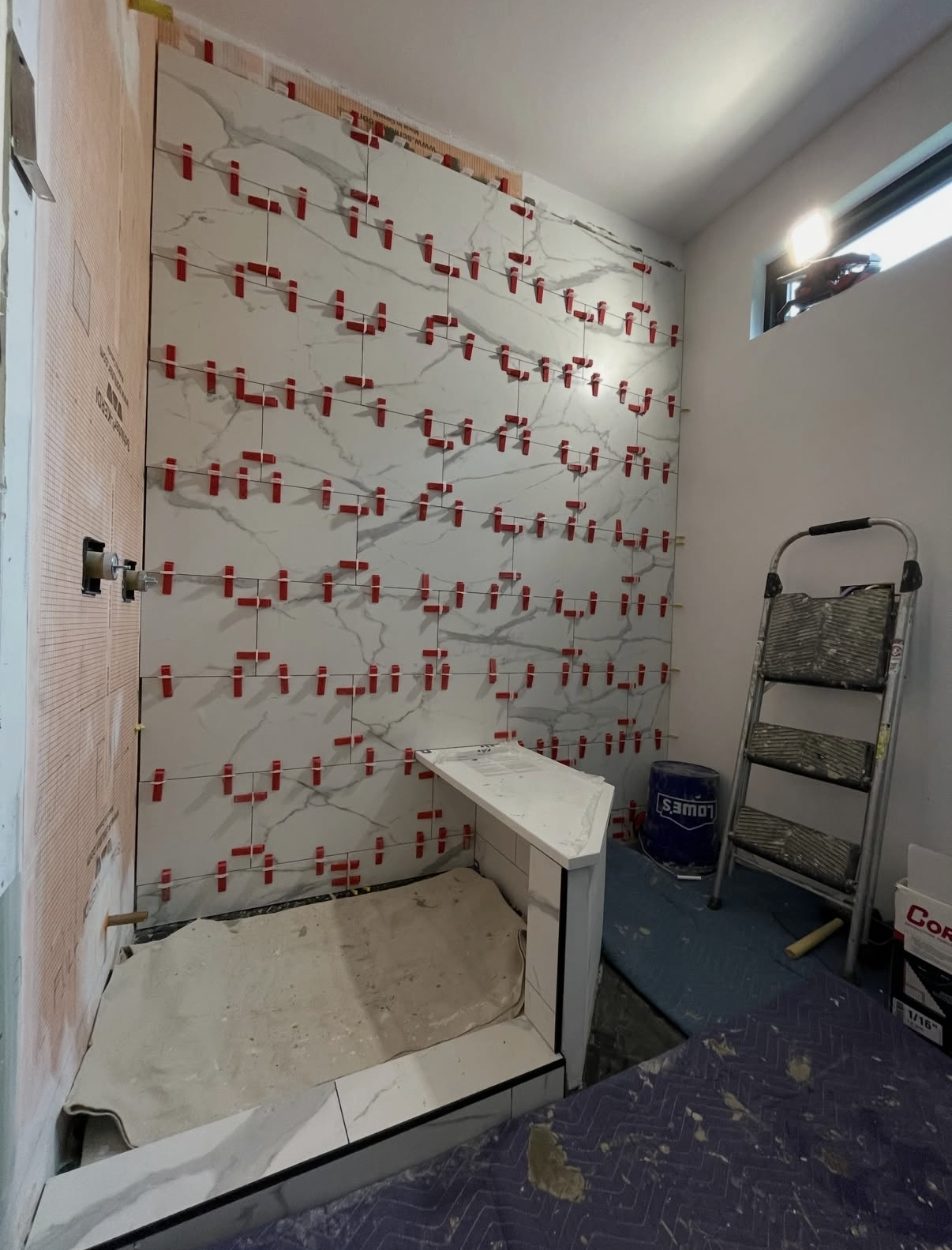
What Are Tile Leveling Clips?
Tile leveling clips are small plastic components used as part of a tile leveling system. They are typically paired with reusable wedges or caps and, depending on the system, specialized leveling pliers.
The clip sits underneath the edges of two adjacent tiles. A wedge is then inserted through the clip and tightened, applying pressure that helps bring the two tile surfaces into alignment.
The basic concept is simple:
The clip creates consistent spacing, while the wedge applies pressure to help keep the tile edges flush.
This temporarily locks neighboring tiles into position while the adhesive cures. Once the adhesive has set, the clips are removed, leaving the grout joint ready for grouting.
What Is Tile Lippage?
One of the primary reasons professional tile installers use leveling systems is to reduce lippage.
Tile lippage is the height difference between two adjacent tiles. For example, if one tile edge sits slightly higher than the tile next to it, you can feel or see a small ridge where the two tiles meet.
Lippage can be particularly noticeable with:
Large-format porcelain tile
Rectified tile
Long plank-style tile
Large bathroom floor tile
Polished or high-gloss tile
Tile installed with narrow grout joints
Large-format tile can make these differences more obvious because its larger surface area does not conform to minor variations in the substrate as easily as smaller tile. Narrow grout joints can also make differences between adjacent tile edges more visually apparent.
A tile leveling system helps minimize these differences by mechanically holding neighboring tiles in alignment while the mortar cures.
Are Tile Leveling Clips Necessary for Every Tile Installation?
Not necessarily.
Leveling systems are particularly useful for large-format and rectified tile, but they aren't automatically required for every tile project.
Small-format tile, mosaics, and certain installations may be easier to manage using traditional spacers and standard installation techniques.
The decision should depend on the tile format, substrate, layout, grout joint, and installation method.
A leveling system should be viewed as an additional tool for controlling the installation—not as a replacement for good tile-setting practices.
Tile Leveling Clips vs. Traditional Tile Spacers
It's important to understand that leveling clips and traditional spacers are not exactly the same thing.
Traditional tile spacers primarily control the distance between tiles and help establish the grout joint.
Tile leveling systems control spacing while also applying pressure to help align the faces of adjacent tiles.
In other words:
Spacers control the gap. Leveling systems help control the gap and the height relationship between neighboring tiles.
For many large-format tile installations, installers may use a leveling system along with proper layout and installation techniques to achieve the best result.
Do Tile Leveling Clips Make an Uneven Floor Level?
No, and this is an important distinction.
Despite the name, tile leveling clips do not actually level an uneven substrate.
If a floor has significant dips, humps, or other irregularities, those issues need to be addressed before the tile is installed.
A leveling system is designed to help make adjacent tiles flush with one another. It cannot compensate for a fundamentally unsuitable substrate.
This is why professional tile installation starts with proper substrate preparation.
The Bottom Line
Tile leveling clips are a relatively simple tool that can make a significant difference in the finished appearance of a tile installation.
By combining a clip with a wedge or cap, installers can create consistent spacing and apply controlled pressure that helps keep neighboring tiles flush while the thinset cures. This is especially beneficial for large-format porcelain, ceramic, and rectified tile, where lippage can be more visible.
However, the best results still begin with the fundamentals: a properly prepared substrate, appropriate mortar, correct mortar coverage, accurate layout, and proper installation technique.
Think of tile leveling clips as a precision tool, not a shortcut. When used correctly, they help maintain the alignment and consistency needed for a professional-looking tile installation.