
Concrete cardboard tubes are a vital tool in modern construction, offering a simple, cost-effective way to shape concrete into strong, reliable structures. These tubes, often referred to as Sonotubes, are used in concrete footings as temporary molds to shape, protect, and guide the curing of concrete for piers and columns.
These heavy-duty, spiral-wound fiberboard tubes serve several critical purposes in construction:
Preventing Soil Contamination: When pouring concrete directly into an augured dirt hole, loose soil can mix with the wet concrete, compromising its structural integrity. The tube acts as a clean barrier.
Above-Grade Extensions: Building codes often require wooden posts (like deck or porch supports) to sit several inches above the ground to prevent moisture rot. The tubes allow the concrete to extend above the soil level cleanly and attractively.
Controlling the Cure: The cardboard walls control the drying rate of the concrete, preventing it from losing moisture too rapidly to the surrounding earth.
Preventing "Frost Heave": In cold climates like Ohio, water in the soil can freeze and expand, pushing up against foundations. A smooth cardboard tube ensures the ground cannot grip the concrete, allowing the earth to slide past the footing without lifting it.
Before setting the tube in place at its required depth, we use an auger bit on our skid steer to dig a uniform, perfectly vertical, and cleanly excavated hole.
After, the tubes are placed as seen below.
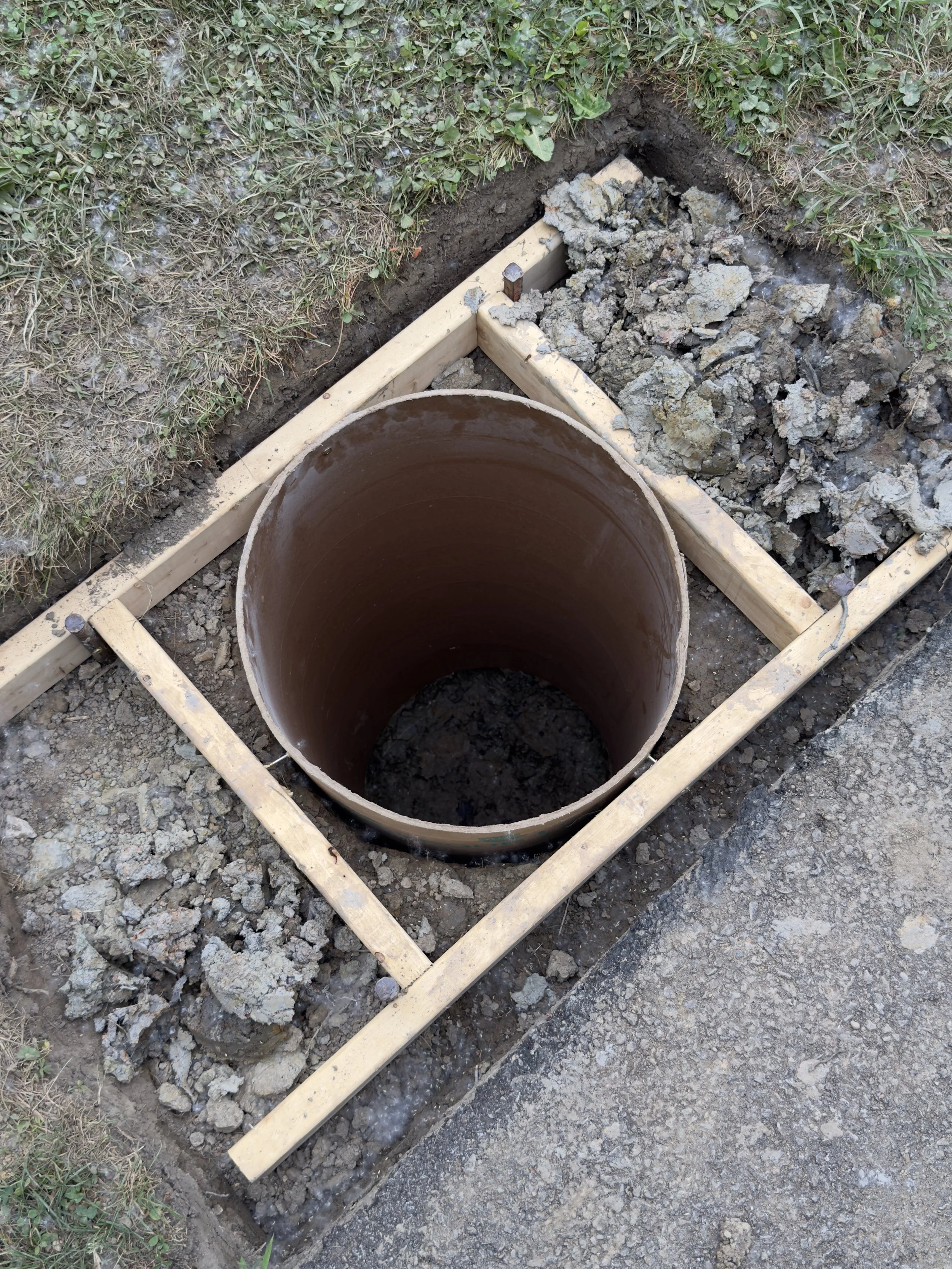
We’ll pour concrete straight into these tubes, allowing it to cure in peace. Since the tubes are buried, they will not be removed. The cardboard will naturally degrade over time. Hardware will be installed on the top of the concrete form, and the rest of the structure, in this case, a porch, will be built atop it.
Keep an eye out for updates as we chip away at this porch build — additions are one of our favorite types of project, so we’re looking forward to sharing the results of this one.
If you have your own porch or deck addition you’d like to plan, please reach out to us through our contact form — we’d love to bring your vision to life.